• Crosswind landings
• Non-towered airport operations
• Wind shear awareness
• Mixture management
You Don’t Really Think About It
When you board an airplane, you rarely think about what happens between departure and arrival.
You depart one airport and land at another. That’s just flying.
But for a student pilot, landing at another airport is a milestone.
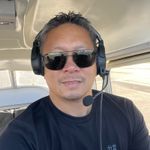
Before we even climbed into the airplane, my instructor, Liana, asked a simple question.
“Where do you want to fly?”
She suggested Hana.
Then she suggested Molokaʻi.
From the back seat, my longtime friend Jerry responded, “Molokaʻi? Hana?” We all laughed because it sounded like we were choosing between two completely different destinations.
It wasn’t until later that it clicked.
We weren’t choosing one.
We were flying both.
Without realizing it, I had just planned my first cross-country flight.
Despite the name, a cross-country flight doesn’t mean flying across the country. For a student pilot, it simply means departing one airport, landing at another, and continuing the flight. Up until that day, every lesson in my logbook had started and ended at the same airport. This one would take us from Kahului to Molokaʻi, then Hana, before returning to Kahului.
That realization alone had me excited before we had even started the engine.
Here's the flight that this story is about.
Why I Book Discovery Flights
One question I get from time to time is how I’m able to fly in places like Maui.
The answer is surprisingly simple: discovery flights.
Most flight schools offer them. They’re designed for anyone who’s curious about aviation, whether you’ve never touched the controls before or you’re already working toward a pilot certificate.
For me, they’ve become much more than an introduction to flying.
A discovery flight gives me access to an airplane, a local Certified Flight Instructor, and an opportunity to experience aviation somewhere completely different from my home airport in San Diego.
Because I’m already a student pilot, I use discovery flights as another way to continue my training outside of my regular lessons.
Every instructor brings a different perspective. Every airplane flies a little differently. Every airport presents its own challenges, and every region has its own terrain, weather, and local knowledge. Those differences are exactly why I enjoy booking discovery flights whenever I travel.
If you’ve ever been curious about flying, you don’t have to be a student pilot to try one. Discovery flights are available all over the country, and in many vacation destinations around the world. You might discover a new hobby.
I just happen to be a student pilot who uses them to keep learning while exploring new places.
One of the reasons I enjoy booking discovery flights while traveling is the opportunity to learn from different instructors. Every CFI has developed techniques, habits, and ways of thinking shaped by the environments they fly in every day. Those perspectives are difficult to capture in a textbook, but easy to appreciate when you're sitting beside someone who has spent thousands of hours in the left seat.
I've found that learning from experienced pilots isn't much different from learning from experienced engineers. Procedures can be documented, but many of the best lessons are passed along in conversation.
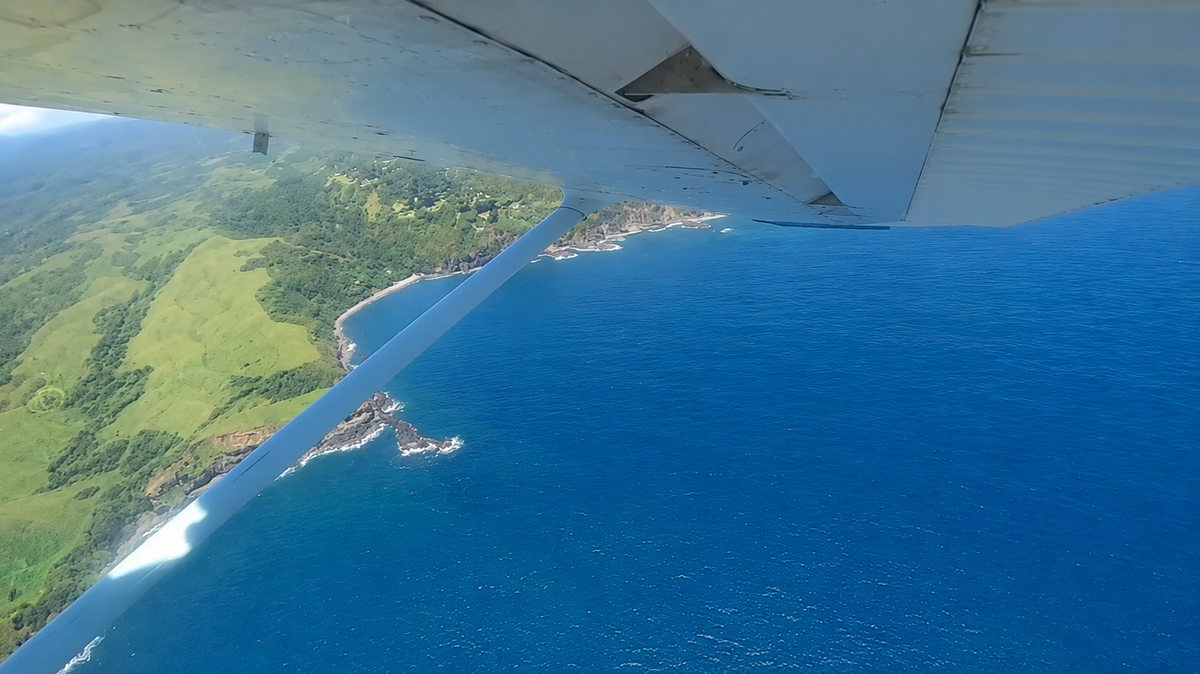
One example that has stayed with me came while we were flying over the ocean. Liana told me to look at the water. If the surface is rough, expect the air above it to be rough as well. It's a simple visual cue, but it's the kind of practical knowledge you only learn from someone who has spent years flying in the same environment.
Those conversations are some. of my favorite parts of flying. While we're cruising between airport, the headset becomes less about checklists and radio calls and more about sharing experience...
Between the Airports
Before we taxied out, Liana and I spent a few minutes talking through what would happen if something went wrong after takeoff. We discussed who would take control of the airplane, what my role became if she had to fly, and how I would work through the emergency checklist and handle the radios while she focused on the aircraft.
We also looked beyond the runway. Straight ahead was the ocean, so our first choice would be the open fields before the shoreline. If that wasn’t an option, there were additional fields off to either side of the airport. We hadn’t even started the engine yet, but we had already talked through where we would go if we lost it.
The best instructors don’t wait until something fails before discussing failure. They walk through the possibilities beforehand so that, if something unexpected does happen, you’re making decisions from preparation instead of panic.
Once we were airborne, all of that planning faded into the background, and the day unfolded naturally.
“Turn me to a heading of three-three-zero,” Liana said as we climbed away from Kahului.
We were on our way to Molokaʻi.
To this day, I still remember that heading.
Looking back, what stands out isn’t the route. It’s how little of the learning felt like a lesson. There wasn’t a checklist of topics or a structured lecture. We simply talked as things came up, and those conversations became some of the most memorable parts of the flight.
Even before we departed, Liana offered a piece of advice I don’t remember learning from any FAA handbook.
“Leave yourself a little more room before the hold short line. If something unexpected happens, like an engine indication doesn’t look right or you suddenly need to turn around, you’ll have enough room to do it without crossing the runway and requesting additional clearance.”
She explained that DPEs like to see that. It shows you’re thinking ahead and leaving yourself options instead of putting the airplane in a position where your only choice is to request permission to cross the hold short line.
It’s one of those small pieces of advice that probably won’t appear on the written exam, but it comes from experience.
Later, on the way to Hana, she shared another shortcut that also wasn’t in a handbook.
If the cowl sits about three fingers below the horizon, you’re essentially straight and level. Instead of chasing every tiny movement on the instruments, you can simply look outside.
It was another reminder that experienced instructors often teach you ways of seeing, not just procedures to memorize.
As we approached Hana, the conversation shifted again. The scenery gave way to radio calls, traffic patterns, and scanning for other airplanes. There wasn’t a control tower sequencing arrivals, so Liana talked me through how to build a mental picture of where everyone else was before entering the pattern. It wasn’t complicated, but it was another reminder that flying is often about knowing what’s happening outside the airplane just as much as what’s happening inside it.
Some of those conversations made it into the video. Others quietly faded beneath the music.
I record both the audio and video from my flights so I can review them afterward. It gives me a chance to revisit mistakes, hear my instructor’s feedback again, and reinforce lessons that are easy to miss in the moment. Even something as simple as Liana reminding me to keep my hand on the throttle is easier to remember when I can replay the flight.
The recordings eventually became this video, but they still serve the purpose they were originally intended for: helping me become a better pilot.
Moments I’ll Remember
Certain moments stand out more than others.
Landing at Kalaupapa was memorable for reasons I wasn’t expecting.
During the flight, Liana shared some of the history of the peninsula and why access to the community is so carefully managed. Until then, I hadn’t appreciated the significance of the airport beyond it being another stop on our route. Learning a little about Kalaupapa’s history gave the landing a completely different meaning.
As Molokaʻi came into view, Liana casually said,
“We’re going to land on Molokaʻi.”
From the back seat, Jerry immediately replied,
“We’re going to land on Molokaʻi?”
His surprise made me laugh because, only a few minutes earlier, I had been thinking the same thing.
Later, we continued to Hana.
The approach was beautiful, but the crosswind reminded me that every airport has its own personality. Liana assisted with the landing, something you’ll actually see in the video. It was a good reminder that training isn’t about proving you can do everything yourself. It’s about recognizing when to accept instruction, building experience, and leaving the flight knowing more than you did when you started.
Those are the moments that stay with you.
Looking Back
Months later, while editing this video, I reviewed nearly two hours of cockpit recordings.
I expected to relive the scenery. The waterfalls. The coastline. Flying between the islands.
Instead, I found myself replaying the conversations.
Looking back, I realized I wasn’t just collecting flight hours in my logbook.
I was collecting another perspective.
That's one of the reasons I keep documenting these flights. Every instructor has a different way of explaining the same concept, and every airport has something new to teach. Those lessons aren't just making me a better pilot. They're reinforcing something I've seen throughout my career: the most valuable knowledge is often passed from one practitioner to another, one conversation at a time.
The logbook will remember this as my first cross-country flight. I'll remember it for everything else.
Aircraft
Cessna 172M Skyhawk (N5055H)
Location Maui, Hawaii
Route Kahului (OGG) → Kalaupapa (LUP) → Hana (HNM) → Kahului (OGG)
Flight Type
Student Pilot Training
Flight Instructor
CFI Laina Labrador
Flight Time
2hr